
The Golden Fruit: A Love Letter to Quince
- Hectors Apothicaire

- Dec 19, 2025
- 3 min read
Updated: Jan 18
There are fruits that nourish, fruits that delight and fruits that feel like small treasures from another time. The quince—golden, fragrant and quietly regal—belongs to the last of these. Though it sits modestly in autumn and winter markets, its history is woven through ancient myth, its perfume is unmistakable and its transformation in the kitchen is nothing short of magical.

A Fruit Steeped in History
Long before apples became the symbolic fruit of temptation, the quince held that honor. In classical mythology, the “golden apple” awarded by Paris to Aphrodite—the gift that sparked the Trojan War—is believed by many historians to have been a quince. Native to the Caucasus and Persia, it traveled along ancient trade routes to Greece and Rome, where it quickly became a fruit associated with love, fertility, and celebration.
The Greeks dedicated quince to Aphrodite; newlyweds would share one to perfume their breath with sweetness. The Romans simmered it with honey and spices, an early ancestor of today’s preserves. Throughout the Middle Ages and Renaissance, quince paste "membrillo" became a luxury treat in European courts, often molded into intricate shapes and served alongside rich cheeses.
A fruit with such lineage demands a bit of ceremony and quince rewards those who honor its traditions.
The Art of Picking the Perfect Quince

Unlike the approachable apple or pear, quince isn’t meant to be eaten raw. Its skin is tough, its flesh unyielding and its flavor—before cooking—can be bracingly tart. But these qualities serve a purpose: they allow quince to hold its structure beautifully through long cooking, and they preserve its perfume until the moment it meets heat.
When selecting quince:
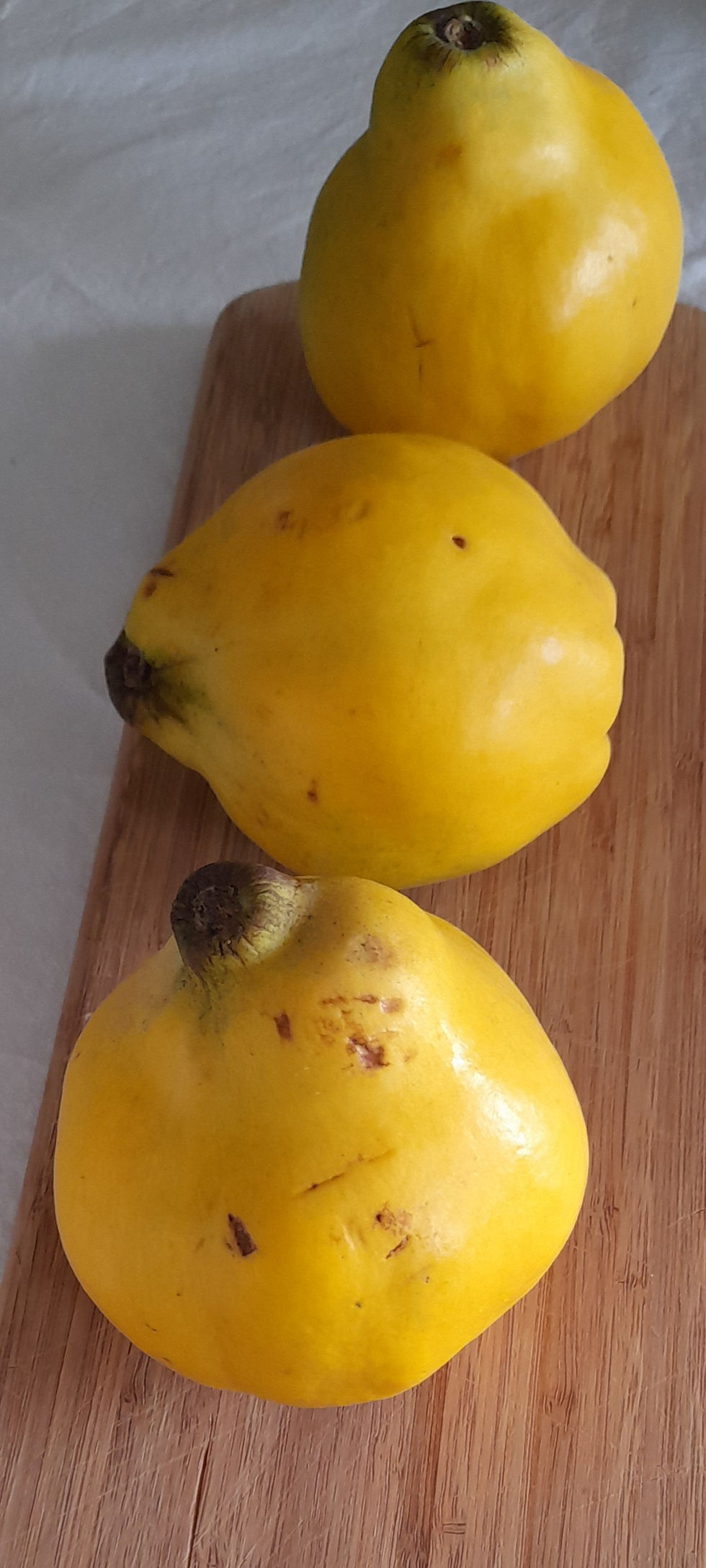
Colour: A deep golden-yellow tone, avoiding fruit that is overly green.
Fragrance: A ripe quince emits a heady, floral scent that can perfume an entire bowl of fruit.
Shape: Choose heavy fruits with smooth, unblemished skin. Small bumps or a light fuzz are natural.
Firmness: They should be firm—very firm—but not rock-hard.
Freshly picked quince can keep for weeks if stored in a cool, dry place, allowing its fragrance to deepen over time.
Quince in the Kitchen: From Pale Flesh to Ruby Jewel
Perhaps the greatest delight of quince is its transformation. When cooked, the pale, ivory flesh slowly turns shades of rose, then amber, then deep ruby red. This alchemy is one of the quiet joys of winter cooking.

Making Quince Jelly: A Jewel in a Jar
Quince jelly is translucent, shimmering and richly aromatic—one of the few preserves that can feel luxurious with even a single spoonful.
Basic method:

1. Prepare the fruit: Wash, core and roughly chop quince—peels and seeds included, as they contain natural pectin.
2. Simmer gently: Cover with water and cook until the fruit is soft and fragrant.
3. Strain: Let the liquid drip slowly through a fine cloth or jelly bag without pressing.
4. Sweeten: For every cup of juice, add an equal cup of sugar.
5. Cook until magic happens: Simmer until the mixture thickens and turns a deep rosy hue.
6. Jar and seal: Pour into sterilized jars, capturing the warm perfume of quince for winter mornings.
The result is a jelly that glows like stained glass and tastes of autumn orchards and honeyed citrus.

Quince Paste: The Old-World Delicacy
Quince paste—"dulce de membrillo" in Spanish, "pâte de coing" in French—has been cherished for centuries, often paired with aged cheeses like Manchego. Dense, sweet and sliceable, it’s a confection that elevates a simple cheese board into something remarkable.
How to make it:

1. After making jelly, purée the cooked fruit pulp instead of discarding it.
2. Weigh the purée and add an equal weight of sugar.
3. Cook low and slow, stirring often, until the mixture thickens and darkens.
4. Spread into a shallow dish and let it cool into a firm, sliceable block.
The flavor is floral, honeyed and gently spicy—an echo of ancient orchards and old-world kitchens.
A Fruit Worth Rediscovering
In a world of instant gratification, quince remains proudly old-fashioned. It asks for time, patience and a willingness to engage in culinary alchemy.

But those who answer its quiet call find themselves rewarded with flavors that feel timeless—fragrant jellies, glowing preserves and a connection to centuries of cooks who understood the joy of transforming a humble fruit into something exquisite.
Golden and enigmatic, quince is more than a fruit—it’s a piece of history, a seasonal ritual, and a small miracle for the kitchen.


Comments